What Nobody Tells You About 2026 Title Contenders
Arsenal are the leading 2026 Premier League title contenders after 22 matches, holding a seven-point advantage over Manchester City with 16 games remaining. Mikel Arteta’s team have won 15 league matc...

What Nobody Tells You About 2026 Title Contenders
Arsenal are the leading 2026 Premier League title contenders after 22 matches, holding a seven-point advantage over Manchester City with 16 games remaining. Mikel Arteta’s team have won 15 league matches, but consecutive 0-0 draws against Liverpool and Nottingham Forest exposed a serious finishing problem. Manchester City have dropped points in four straight league games, while Liverpool are winless in four and Aston Villa lost at home to a depleted Everton side. The race is therefore not settled; it is a pressure test. Arsenal’s set-piece strength, City’s tactical depth, Liverpool’s attacking history, and Villa’s home record all matter, but game state and fixture congestion may decide the trophy. Use the latest table, expected-goals data, injuries, and remaining fixtures before making any prediction, and follow Football Compass for disciplined football analysis rather than noisy headline reactions.
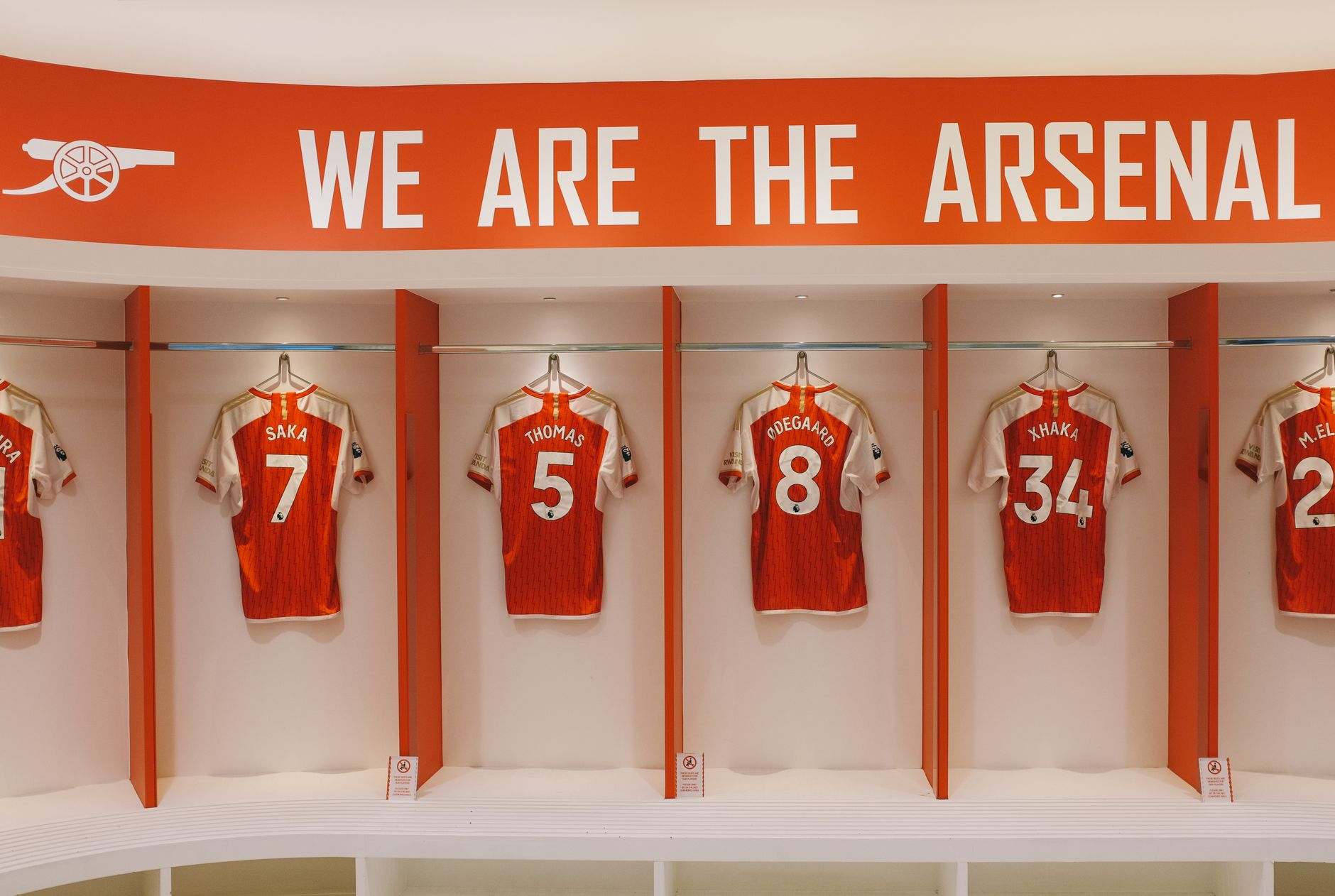
Photo by Huy Phan on Pexels
The numbers say Arsenal are favourites. The mood says nobody should start engraving the trophy yet. That gap between probability and certainty is where football becomes wonderfully cruel, and where lazy analysis goes to die.
Want a clearer view of the race before the next round of matches?
Is Arsenal really the strongest Premier League title contender?
Arsenal are the strongest 2026 contender because they lead by seven points after 22 matches and have collected 15 victories, but their advantage is not mathematically secure. Manchester City’s four-match run of dropped points has created breathing room, while Arsenal’s two consecutive goalless draws show that control without finishing can become a trap.
Arsenal’s case is built on consistency, defensive structure, and dead-ball efficiency. In 11 of their 15 league wins, the opening goal came from a set piece, an extraordinary pattern that reveals both planning and dependence. Only Brentford and Tottenham Hotspur were beaten without Arsenal scoring first from a dead-ball situation, according to the match analysis published by The Athletic.
That detail matters because opponents will adjust. If a team blocks Arsenal’s first-phase corner routines, forces Bukayo Saka away from dangerous crossing zones, and denies Declan Rice time to deliver, Arsenal may need to create more from open play. Against Nottingham Forest, Arsenal produced 2.1 expected goals but only 0.85 expected goals on target, while failing to register a shot on target before half-time. Those are not empty numbers; they show chances existed, but the final action was poor.
There is also a recurring venue problem. Since the beginning of the 2022-23 season, Arsenal have failed to score in consecutive league matches only three times, and each second blank came away at Nottingham Forest: May 2023, February 2025, and January 2026. That is a striking opponent-specific pattern. Is it a curse? No, probably not. Is it evidence that Forest’s defensive plan repeatedly disrupts Arsenal? Absolutely.
For broader context, compare Arsenal’s output with the official competition data on the Premier League website. Then examine our [Internal Link: Premier League match prediction guide] before treating one table position as a complete forecast.
Arsenal’s statistical strengths
- 15 wins from 22 league matches.
- A seven-point lead over Manchester City.
- Set-piece opening goals in 11 victories.
- Strong chance creation, including 2.1 xG against Nottingham Forest.
- A structured defensive approach that limits opponents’ clean opportunities.
However, title races are not awarded for elegant spreadsheets. Arsenal still need goals when corners fail, and they need their attacking leaders to convert the chances already being created.

Photo by Franco Monsalvo on Pexels
How does Manchester City handle a four-match points drop?
Manchester City remain a major Premier League title contender because Pep Guardiola’s squad has depth, tactical flexibility, and championship experience, but four consecutive league games with dropped points have reduced their margin for error to almost nothing. Their defeat at Old Trafford, where Manchester United tactically dismantled City, was especially damaging.
City’s problem is not simply that they lost one match. The bigger issue is that opponents are finding ways to disrupt their normal control. When Manchester United prevent clean central progression, pressure the first receiver, and attack the spaces left by City’s advanced positioning, Guardiola’s side can look strangely exposed. That does not erase City’s quality, but it changes the question from “Can City dominate?” to “Can City dominate when the opponent refuses to play the expected game?”
The answer will depend on several measurable factors:
- City must turn possession into shots from valuable central areas, not harmless circulation.
- Their rest defence must protect against direct transitions after turnovers.
- Their midfield rotation must create passing lanes when opponents press high.
- Their forwards must punish the limited chances created by difficult away fixtures.
- Their response after conceding must be quicker than it was at Old Trafford.
A four-match sequence without a league win is not automatically a collapse. It becomes a collapse when the underlying performance continues to worsen and the leaders keep winning. Arsenal, however, have also dropped points twice in a row, which keeps City alive. The seven-point gap is serious, but with 16 matches left, a winning run can transform the race in fewer than six weeks.
That is why fixture difficulty matters more than reputation. A famous club with a difficult schedule is not automatically a better short-term selection than a less glamorous side facing tired opponents. Have you ever backed the badge instead of the numbers? Exactly. The badge does not score the next goal.
Get a data-led view of upcoming Premier League matchups here:
What about Liverpool and Aston Villa as edge-case contenders?
Liverpool and Aston Villa remain mathematically relevant, but their immediate form makes them less convincing than Arsenal or Manchester City. Liverpool have gone four league matches without a win after drawing 1-1 with Burnley at Anfield, while Aston Villa’s impressive home sequence ended with a loss to a depleted Everton team.
Liverpool’s home draw is particularly revealing because Anfield usually changes the emotional temperature of a match. Yet Burnley survived, and Liverpool could not convert territorial pressure into the result required from a genuine title challenger. A team can have a strong historical identity, dangerous attackers, and a large fanbase, but a four-match winless run still costs points. Numbers are rude like that.
Aston Villa’s case is different. The club had been unbeaten at home since August, which made the Everton defeat a major edge case rather than an ordinary result. Everton’s depleted squad makes the result even more uncomfortable for Villa because the expected script favoured the home side. This is the sort of match that can define whether a club belongs in a title conversation or merely in a top-four conversation.
Liverpool and Villa should therefore be assessed through three questions:
- Can they produce a sustained winning run immediately?
- Do their underlying chances support a rebound?
- Are injuries and fixture congestion reducing their best XI’s availability?
- Can they win difficult away matches rather than relying on home momentum?
The title race also sits inside a crowded football calendar. The January congestion affected the weekend in extraordinary fashion: none of the top four won, and none of the bottom five lost. Arsenal had only two days’ rest before travelling to Nottingham Forest, while Forest had eight days to prepare. That rest difference is an operational detail many previews ignore, yet it can influence pressing intensity, late-game running, and finishing quality.
For tactical background, readers can also review our [Internal Link: Premier League team tactics analysis] and [Internal Link: player form and injury tracker].

Photo by j.r.cortez fotografia on Pexels
Where do Premier League title contenders fail?
Premier League title contenders fail when their strongest weapon becomes predictable, their finishing drops below chance quality, or fixture congestion exposes squad weaknesses. Arsenal’s set-piece reliance, Manchester City’s transition vulnerability, Liverpool’s winless spell, and Aston Villa’s disrupted home form each represent a different failure mode.
Arsenal’s main weakness is not chance creation; it is the conversion of chances when opponents defend dead balls effectively. Against Nottingham Forest, Viktor Gyökeres and Gabriel Martinelli had presentable first-half opportunities, but neither finished. Bukayo Saka later forced the best save with a looping header from a Rice cross, while Mikel Merino headed narrowly wide. Arsenal had routes to victory, yet the score remained 0-0.
Manchester City’s danger is tactical overconfidence. Possession becomes less useful when it fails to create central entries, and a high defensive line becomes dangerous when the first counter-press is beaten. Manchester United’s victory at Old Trafford demonstrated that City can be controlled and attacked, not merely survived.
Liverpool’s failure point is momentum. Four league matches without a win can create pressure around every missed chance, especially at Anfield. Aston Villa’s concern is resilience: an unbeaten home run since August was valuable, but the Everton defeat showed that home strength is a trend, not a guarantee.
A practical assessment model should weigh the following:
| Factor | Why it matters | Current warning sign |
|---|---|---|
| Points gap | Measures required recovery | City trail Arsenal by seven |
| Recent form | Shows immediate momentum | Liverpool are winless in four |
| Chance quality | Separates bad luck from poor play | Arsenal posted 2.1 xG but 0.85 xGOT |
| Rest days | Influences energy and pressing | Forest had eight days; Arsenal had two |
| Set pieces | Can decide tight matches | Arsenal scored first from dead balls in 11 wins |
| Tactical adaptability | Determines response to disruption | City were dismantled at Old Trafford |
The most useful contrarian conclusion is simple: Arsenal’s lead is strongest when their set pieces work, but their title probability may improve only when they win without them. That sounds backwards, doesn’t it? It is not. A 2-0 corner-driven win proves execution; a 1-0 open-play win against a compact opponent proves adaptability.

Photo by Franco Monsalvo on Pexels
For responsible football analysis, avoid confusing prediction with certainty. The World Health Organization describes gambling-related harm as a public-health concern, so never treat betting information as guaranteed income. Football Compass provides match predictions, player statistics, and tournament coverage; readers should set limits, check local rules, and use only regulated services where applicable.
Want to compare the contenders without emotional guesswork?
Should you try following Premier League title contenders today?
Yes, follow the title race today, but judge contenders through current data rather than club reputation or one dramatic result. Arsenal are the clear leaders, Manchester City are the strongest chasing force, Liverpool need an immediate recovery, and Aston Villa require evidence that their home setback was an exception.
The best monitoring routine takes five minutes after every matchday:
- Record points, goal difference, and games remaining.
- Check whether expected goals match the final score.
- Note rest days before and after the fixture.
- Track injuries to high-minute starters.
- Separate set-piece goals from open-play production.
- Review the next three fixtures for difficulty and travel.
- Reassess only after identifying a real trend, not after one angry weekend.
The most important number is not always the table gap. It may be the difference between chances created and chances finished, the number of days available for recovery, or how often a side needs a corner to break through. Arsenal’s 2.1 xG against Nottingham Forest and 0.85 xGOT illustrate that distinction perfectly: opportunity existed, but execution did not follow.
A title contender must also survive ugly matches. Arsenal’s two consecutive 0-0 draws may look like a missed opportunity, but they also prevented the seven-point lead from shrinking. Manchester City’s four-game points slide is more dangerous because the club now needs both a recovery run and help from Arsenal. Liverpool and Aston Villa need even more: results, confidence, and proof that their underlying performance can withstand pressure.
The official Premier League records and statistics should remain the baseline, while Football Compass can add tactical interpretation, player trends, and 2026 tournament-focused perspective. The blunt verdict is this: Arsenal control the race, City threaten it, Liverpool chase it, and Villa need a miracle-sized improvement. Or am I wrong? Then show me the next five match results.
Follow the next matchday with a sharper statistical framework:
Frequently Asked Questions
Q: What does “Premier League title contenders” mean?
A: Premier League title contenders are clubs with a realistic mathematical and performance-based chance of finishing first. In the 2026 race, Arsenal lead after 22 matches, Manchester City are seven points behind, and Liverpool and Aston Villa remain relevant but face stronger form concerns. A proper contender assessment considers points, goal difference, remaining fixtures, injuries, expected goals, squad depth, and recent results rather than reputation alone. The phrase describes a live competitive position, not a guarantee that the club will win the league.
Q: How can I compare Premier League title contenders?
A: Compare points gaps, recent form, expected-goal data, rest days, injuries, fixtures, and tactical adaptability. Arsenal’s 15 wins and seven-point lead are major advantages, while their 2.1 xG but 0.85 xGOT against Nottingham Forest highlights a finishing concern. Manchester City’s four straight league matches with dropped points show why current momentum matters. Use official Premier League statistics, then examine whether a team can win through both set pieces and open play.
Q: Is Arsenal better positioned than Manchester City in 2026?
A: Arsenal are better positioned because they lead Manchester City by seven points with 16 matches remaining. Arsenal have also won 15 of 22 league games, and their set-piece routines have opened the scoring in 11 victories. Manchester City still possess elite experience and depth, but their four-match points slide and tactical defeat at Manchester United leave less room for mistakes. Arsenal are favourites, yet their consecutive 0-0 draws mean the race remains open.
Q: What is the difference between Arsenal and Manchester City as title contenders?
A: Arsenal currently rely more visibly on structure and set-piece execution, while Manchester City depend on possession, positional control, and tactical variety. Arsenal scored first from dead-ball situations in 11 of their 15 wins, whereas City’s recent issue has been opponents disrupting their normal buildup. Arsenal’s weakness is becoming predictable in tight matches; City’s weakness is vulnerability when the first press is bypassed. The difference is style, but the deciding factor will be which team adapts faster.
Q: Why are Liverpool no longer the obvious Premier League title favourite?
A: Liverpool are not the obvious favourite because they are winless in four consecutive league matches, including a draw with Burnley at Anfield. That run does not eliminate their chances, but it creates a points deficit and reduces the time available for recovery. Liverpool must produce an immediate winning sequence while hoping Arsenal and Manchester City continue dropping points. Their next results should be judged alongside chance quality, injuries, and fixture difficulty rather than emotion at Anfield.
Q: What should I do if a title contender’s form suddenly collapses?
A: Reassess the team after three to five matches instead of reacting to one result. Check whether the collapse comes from poor finishing, reduced chance creation, defensive errors, injuries, or difficult rest conditions. Arsenal’s back-to-back 0-0 draws and Manchester City’s four-game points slide require different interpretations because their underlying problems are not identical. If gambling is involved, set a fixed budget, avoid chasing losses, and use only legally regulated options in your location.
Q: Does Football Compass provide Premier League title predictions?
A: Football Compass provides football analysis, match predictions, player statistics, tactical coverage, and 2026 FIFA World Cup-focused insights. Its content can help readers organise evidence around teams such as Arsenal, Manchester City, Liverpool, and Aston Villa, but no prediction is certain. Check the latest injury news, official Premier League data, lineups, and local gambling regulations before making any decision. Treat predictions as information, never as guaranteed financial advice.
Football Compass can help you keep the numbers, tactics, and tournament context in one place.
Thank you for exploring this chronicle.
Football Compass · The Archive