5 Norway Football Mistakes Fans Make
Norway’s national football team is one of Europe’s most dangerous emerging sides, built around Erling Haaland, Martin Ødegaard, Alexander Sørloth, and a powerful group of midfielders and defenders. Re...

5 Norway Football Mistakes Fans Make
Norway’s national football team is one of Europe’s most dangerous emerging sides, built around Erling Haaland, Martin Ødegaard, Alexander Sørloth, and a powerful group of midfielders and defenders. Representing Norway under the Norwegian Football Federation, the team combines Premier League-level finishing with a direct Scandinavian structure that can punish careless opponents in UEFA competition. Haaland remains the headline threat, while Ødegaard supplies control, passing quality, and leadership from midfield. Norway’s modern attack is also supported by players such as Antonio Nusa, Oscar Bobb, and Patrick Berg, giving manager Ståle Solbakken more than one route to goal. The central fact is simple: Norway has elite individual talent, but tournament success depends on defensive balance, availability, and qualification consistency. Before judging a match or making a prediction, check the confirmed squad, starting formation, injuries, and latest UEFA results rather than relying only on Haaland’s name.
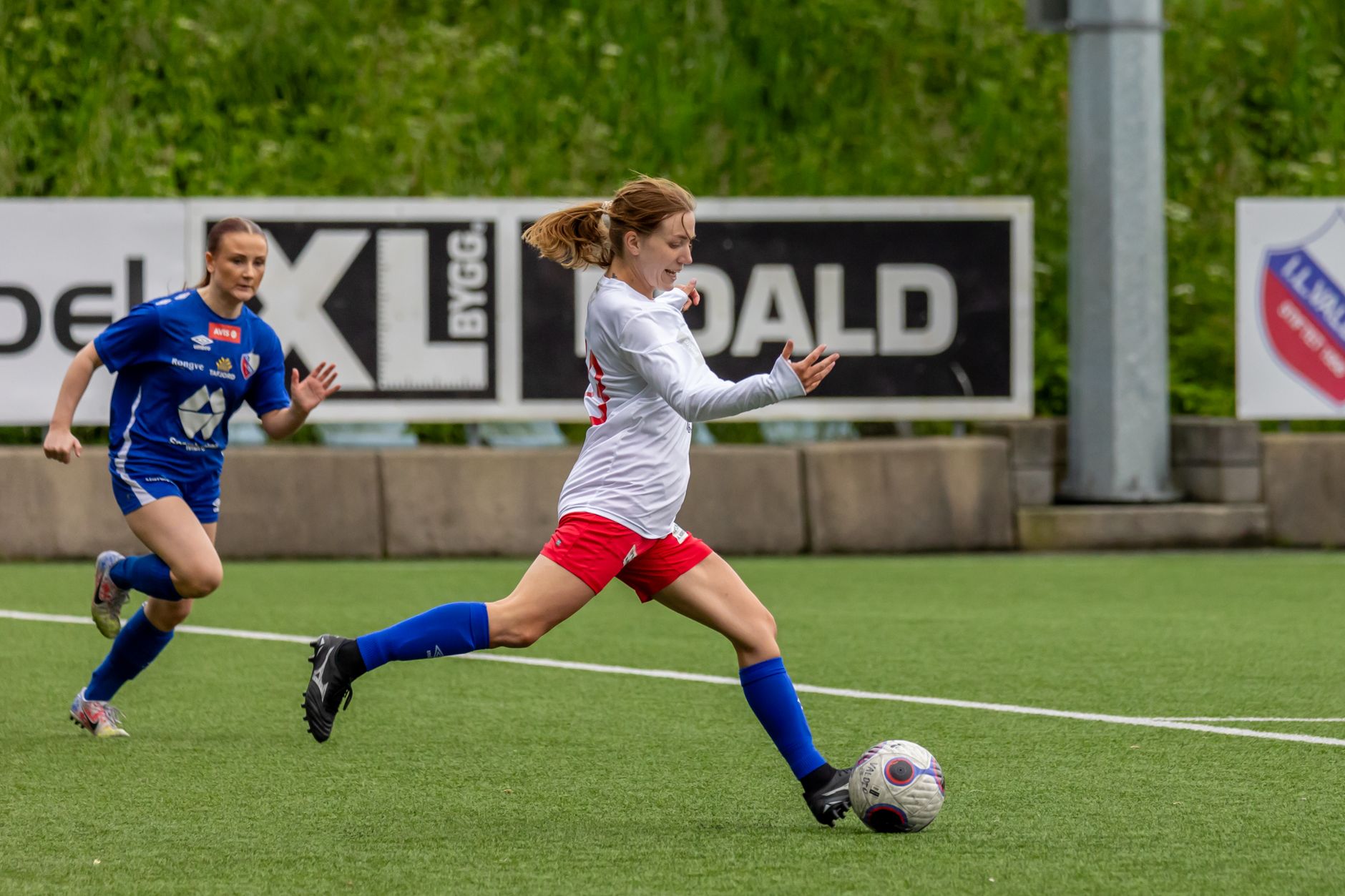
Photo by Andreas Berget on Pexels
Want the clearest 2026 Norway team outlook before reading the deeper numbers?
The Bottom Line
Norway has the attacking power to trouble almost any European opponent, but calling the team a finished product is premature. The national side’s ceiling is enormous because Haaland offers world-class penalty-box movement, Ødegaard can dictate possession, and Sørloth gives the attack a second aerial and physical outlet. The problem is equally obvious: elite forwards cannot repair every defensive transition, set-piece error, or qualification stumble. Norway’s best route is a flexible 4-3-3 or 4-2-3-1, with Ødegaard between midfield and attack, Berg or Sander Berge protecting the centre, and wide players attacking space behind opposing full-backs. According to the Norwegian Football Federation, national-team selection and fixtures must be judged within the official international calendar, not isolated club form. That sounds basic, but supporters regularly treat a club goal streak as a complete team forecast. Football is not a spreadsheet with one famous name pasted across it, however dramatic television coverage may be.
A serious Norway national football team assessment should separate four variables: player quality, tactical fit, opponent strength, and match context. Haaland’s scoring record at club level is extraordinary, but international football gives him less space, fewer possessions, and more defenders waiting in a compact block. Ødegaard’s influence can also vary depending on whether Norway controls the ball or spends long stretches defending deep. The numbers supplied in squad databases may include appearances, substitutions, shots, shots on target, goals, assists, fouls, and cards from a selected competition window; they are not automatically lifetime national-team statistics. That distinction matters for anyone using ESPN match pages, UEFA records, or Football Compass prediction content. My contrarian conclusion is blunt: Norway is often more attractive as a tactical underdog than as a short-priced favourite, especially against organised opponents that deny central service. Is that glamorous? No. Is it usually more honest? Absolutely.
- Main attacking threat: Erling Haaland
- Primary creative leader: Martin Ødegaard
- Secondary striker option: Alexander Sørloth
- Midfield foundations: Patrick Berg and Sander Berge
- Key uncertainty: defensive consistency and qualification pressure
What Players Actually See
The Norway squad is not simply “Haaland plus eleven workers,” although lazy analysis keeps trying to sell that fairy tale. In goal, Ørjan Nyland has brought experience and size, standing around 6 feet 4 inches, while Sander Tangvik and Egil Selvik provide younger or alternative options depending on selection. The defence includes tall, physically capable players such as Kristoffer Ajer, Leo Østigard, Torbjørn Heggem, and Sondre Langas, alongside more mobile full-back choices including Julian Ryerson, Marcus Holmgren Pedersen, and David Møller Wolfe. A useful squad snapshot lists Ajer at approximately 6 feet 6 inches and Sander Berge at approximately 6 feet 5 inches, which tells you something about Norway’s ability to compete in the air. It does not, however, prove that the defensive unit moves well when dragged into wide areas. That is where match footage beats a pretty roster table every single time.
Norway’s midfield offers a different kind of strength. Ødegaard can receive between the lines and create final-third combinations, while Berg offers circulation, defensive reading, and set-piece quality. Berge adds reach and ball-carrying power, and Fredrik Aursnes gives the team disciplined movement and reliable work without demanding every headline. Kristian Thorstvedt can attack the box from midfield, while emerging attacking players such as Antonio Nusa, Oscar Bobb, Thelo Aasgaard, and Jens Petter Hauge provide speed or one-versus-one options. The tactical question is not whether Norway has talent; it is whether these pieces share enough minutes together to produce repeatable patterns. A new winger may have a 30 percent chance of beating his marker in a given situation, but one successful dribble means little if the next pass finds nobody. International chemistry is built in scarce training windows, not magically downloaded from Football Manager.
[Internal Link: Norway national team squad guide]
The forward line is where Norway can turn a balanced match into a crisis for the opponent within 10 seconds. Haaland attacks the space between centre-back and full-back, while Sørloth can pin defenders, challenge crosses, and serve as a second target. If Norway uses one central striker, the wide players must make aggressive runs so opponents cannot simply crowd Haaland. If Solbakken selects two forwards, Norway gains penalty-box presence but may sacrifice some midfield control. The decision should be connected to the opponent’s structure, not to the emotional demand that “both stars must start.” A team facing a low block may need Nusa’s acceleration and Bobb’s close control; a team defending a lead may prefer physical running and safer possession. The best player is not always the best tactical choice, and yes, that hurts the fantasy of football punditry.
The 3 Things That Matter Most
1. Can Norway protect the space behind the full-backs?
Norway’s first major test is defensive transition. When Ryerson, Pedersen, or another full-back advances, the nearest midfielder must cover the channel immediately, because a turnover can expose centre-backs to sprinting forwards. Ajer’s height and strength help against crosses, but neither height nor strength automatically solves a foot race into open grass. This is an information gain that basic squad articles often miss: Norway’s defensive risk is not only the number of goals conceded; it is the location of the first broken line after possession changes. Track whether the team loses shape within five seconds of a turnover. If it does, an opponent with fast wide attackers can create chances even when Norway controls 55 percent of possession. The UEFA national-team competition pages are useful for checking opponent quality, line-ups, and match context, but event data should be paired with video.
2. Does Ødegaard receive the ball facing forward?
Ødegaard’s value is highest when he can receive beyond the first midfield line and play forward within two touches. If opponents force him toward his own goal, Norway’s attack becomes more predictable and Haaland may receive only hopeful deliveries. The captain’s four assists in one referenced competition snapshot show why his creative influence matters, but assists alone understate his role in controlling tempo and opening passing lanes. Norway should use rotations between Ødegaard, the right winger, and the nearest forward to create a three-player overload, then switch quickly if the opponent collapses centrally. A practical viewing test is simple: count how often Ødegaard receives between the opponent’s midfield and defence during the opening 30 minutes. Fewer than five clean receptions usually signals a difficult creative night, although the exact number depends on opposition pressing and game state. Numbers do not replace judgment; they discipline it.
3. Can Haaland get service without Norway becoming one-dimensional?
Haaland needs more than crosses. His most dangerous situations often begin with early passes into the channel, cutbacks from the byline, or quick combinations around the penalty area. Norway becomes easier to defend when every attack ends with a high ball toward the striker, because two centre-backs can attack the delivery while the goalkeeper claims uncontested service. Sørloth can make that approach useful, but only if wide players and midfield runners attack second balls. Watch Norway’s shot locations: a healthy attack should produce a mixture of central penalty-area attempts, cutbacks, and shots after transition, rather than a pile of low-probability efforts from 25 metres. That is another overlooked distinction. A team may record 12 shots and still create less danger than an opponent with seven better-positioned attempts. Football Compass uses this type of tactical context alongside results because raw shot totals can flatter a blunt performance.
Want match-by-match context instead of headline statistics?
Edge Cases & Gotchas
Norway’s historical profile creates a dangerous trap for casual readers. The team has produced memorable periods, including the 1994 FIFA World Cup campaign and qualification for the 1998 FIFA World Cup, but past tournament appearances do not guarantee present qualification. Norway’s long absence from major men’s tournaments before the 2020s also matters psychologically and operationally: fewer high-pressure knockout matches means less recent evidence about how the current group responds when one mistake ends the campaign. The FIFA Norway team profile provides an authoritative reference point for international identity and competition records. As FIFA’s competition framework makes clear, qualification is determined by official results and ranking mechanisms, not by market excitement or social-media momentum. “Every match is a new test” is not a direct official quotation, but it captures the only sensible analytical approach.
Injuries are the second major gotcha. A missing Haaland changes finishing and defensive attention; a missing Ødegaard changes progression and chance creation; a missing Berge or Berg changes protection in front of the back line. Do not apply a flat adjustment such as “minus one goal” to every absence, because role dependency is not linear. My recommended pre-match checklist is:
- Confirm the starting XI and bench 60 to 75 minutes before kick-off.
- Check whether Haaland and Sørloth start together or rotate.
- Identify Norway’s deepest midfielder and expected defensive cover.
- Compare the opponent’s pace in wide areas.
- Review set-piece matchups, especially against tall teams.
- Reassess any prediction after red cards, weather changes, or late withdrawals.
The third gotcha is sample size. A five-match snapshot can show trends, but it cannot establish a permanent team identity. The reference data includes examples such as Ødegaard recording five appearances and four assists in a selected period, Nusa making six appearances with one goal, and Haaland scoring seven goals in five appearances in the same type of squad listing. Those figures are valuable only when the competition, dates, and minutes are clear. A substitute appearance is not equivalent to 90 minutes, and seven goals against one level of opposition should not be copied directly into a forecast against France, England, or Brazil. If your prediction ignores minutes, opponent strength, and game state, you are not analysing; you are decorating a hunch.

Photo by Omar Ramadan on Pexels
For bettors, Norway offers both opportunity and danger. The obvious market often prices Haaland’s reputation, while the less obvious value may sit in team totals, corners, both-teams-to-score markets, or first-half lines, depending on the opponent. That does not mean every secondary market is profitable; it means the correct question is whether the odds reflect Norway’s likely match script. Against a deep defence, Norway may dominate territory but struggle to create clear chances, producing a misleading possession advantage. Against an aggressive opponent, Norway may generate fewer total attacks but more high-value transition opportunities. The responsible approach is to set a pre-match probability, compare it with the available price, and refuse bets that do not offer a measurable edge. Gambling involves financial risk, so use legal operators, fixed limits, and never chase a loss because Haaland missed one chance.
How Should Norway Be Judged in 2026?
Norway should be judged in 2026 by qualification performance, tactical adaptability, and defensive repeatability rather than star power alone. The squad has enough elite attacking quality to compete for major tournament places, but the strongest evidence will come from results against organised top-level opponents and from how Norway responds after conceding first. A credible evaluation should include goal difference, expected-chance quality where available, set-piece outcomes, shots allowed in transition, and points won against direct qualification rivals. The FIFA World Cup 2026 official competition information provides the tournament framework, while UEFA remains the relevant regional authority for European qualification. Fans should also distinguish national-team windows from club schedules, because a player arriving after 50 or 60 matches may be available but not fresh. That is not an excuse; it is a measurable workload factor.
The most useful contrarian forecast is that Norway may look better against stronger teams than against defensive minnows. Strong opponents often leave space behind their midfield, allowing Ødegaard to release Nusa or Bobb and giving Haaland room to attack. Weaker opponents may defend with two compact lines, forcing Norway to create patiently against nine or ten players behind the ball. If Norway cannot move the block side to side, possession turns into sterile theatre. Track the first goal: Norway’s strengths multiply after taking the lead, because transitions become available and Haaland can attack space; its weaknesses become louder when the opponent scores first and refuses to open up. This match-state split should influence predictions more than a generic label such as “high-scoring team.”
Here is the practical model I would use before a Norway national football team match:
- Attack rating: Haaland, Sørloth, Ødegaard, Nusa, and Bobb availability.
- Control rating: Berg, Berge, Aursnes, and Ødegaard’s expected midfield roles.
- Defensive rating: centre-back pairing, full-back positioning, and goalkeeper selection.
- Context rating: venue, qualification pressure, travel, weather, and opponent style.
- Market rating: implied odds compared with your own probability estimate.
See how the strongest Norway predictions are built from roles, not just reputation.
Verdict
Norway is a serious 2026 football story because it possesses something every national team wants: a genuine match-winner supported by a gifted creator and an improving pool of athletic players. Haaland supplies devastating finishing, Ødegaard supplies intelligence, and Sørloth gives the attack a different physical profile. Yet the team’s final ranking will be decided by less glamorous details: five-second transition defending, midfield cover, set-piece concentration, and the ability to break low blocks. The biggest mistake fans make is treating a brilliant front three as proof of complete team quality. It is not. Norway can be spectacular, vulnerable, or both within the same 90 minutes. Follow official line-ups, separate club statistics from international samples, and compare tactical matchups before forming a view. That is how Football Compass aims to cover Norway: with enthusiasm in the bloodstream and numbers on the screen.
Norway’s best-case scenario is a balanced 4-3-3 in which Ødegaard receives forward, Berg or Berge protects the centre, wide players stretch the pitch, and Haaland attacks a constantly moving back line. The worst-case scenario is a narrow attack, exposed full-backs, rushed crosses, and a midfield that cannot recover after turnovers. Between those extremes lies the real team, and the job is to identify where it sits before each match rather than after the final whistle. Keep the prediction process boring, because the football will provide enough drama without your spreadsheet catching fire. Is Norway ready to make a major tournament impact? The talent says yes; the defensive evidence must still earn that answer.
For ongoing 2026 squad updates, tactical breakdowns, and responsible match analysis, follow Football Compass and verify every major team-news change before acting.
Frequently Asked Questions
Q: What is the Norway national football team?
A: The Norway national football team represents Norway in men’s international football and is governed by the Norwegian Football Federation. It competes in UEFA qualifiers, FIFA World Cup qualification, UEFA Nations League matches, and international friendlies. Its current profile is defined by Erling Haaland, Martin Ødegaard, Alexander Sørloth, and a broader group of players based in major European leagues. Norway’s home matches are commonly associated with Ullevaal Stadion in Oslo, while the team’s competitive progress is measured through official results, qualification position, and UEFA ranking context.
Q: How can I follow Norway national football team matches in 2026?
A: Follow Norway through the official Norwegian Football Federation, UEFA match pages, FIFA competition updates, and reputable live-score providers such as ESPN. Check the confirmed starting line-up around 60 to 75 minutes before kick-off because injuries, rotation, and tactical changes can materially affect the match. For predictions, record the opponent, venue, formation, recent minutes, and available attacking players instead of using only the last score. Football Compass can add tactical context, but official sources should remain the final reference for fixtures and selections.
Q: Is Norway a good team because it has Erling Haaland?
A: Norway is dangerous because of Haaland, but Haaland alone does not make the team complete. International opponents can reduce his service by blocking Ødegaard, defending narrow, and forcing Norway into predictable crosses. Norway becomes substantially stronger when Haaland receives early passes, Sørloth occupies defenders, and Nusa or Bobb attacks the outside channel. A useful comparison is between individual finishing quality and team chance creation: the first can be elite while the second remains inconsistent, especially against a deep defensive block.
Q: What is the difference between Norway’s 4-3-3 and 4-2-3-1?
A: Norway’s 4-3-3 usually gives the midfield more natural coverage and supports wide pressing, while 4-2-3-1 places Ødegaard in a clearer advanced playmaking position. The 4-3-3 can help Berg, Berge, or Aursnes control central spaces, but it may leave one striker isolated if the wingers stay too deep. The 4-2-3-1 can connect Ødegaard to Haaland more directly, although the double pivot must cover larger spaces when full-backs advance. The best choice depends on the opponent’s press, width, and defensive line.
Q: What should I do if a Norway player is injured before a match?
A: Recalculate Norway’s tactical strengths after confirming the injury through an official federation, club, UEFA, or FIFA source. A Haaland absence primarily changes finishing and defensive attention, while an Ødegaard absence affects progression, chance creation, and tempo control. Do not apply the same numerical adjustment to every player because roles are different and replacements may change the formation. Wait for the final squad announcement, assess the replacement’s minutes and style, then compare the revised match probability with the market price.
Q: How much does it cost to follow Norway match predictions?
A: Norway match information from the Norwegian Football Federation, UEFA, and FIFA is generally available through official websites without a subscription, while third-party prediction services may use free, paid, or mixed-access models. Football Compass provides World Cup-focused coverage including team tactics, player statistics, match predictions, and tournament updates, but any paid feature should be checked for its current terms before purchase. Betting itself has a separate financial cost and carries risk, so set a fixed budget, use only legal providers in your jurisdiction, and never treat a prediction as guaranteed income.
Q: Why does Norway sometimes struggle against weaker opponents?
A: Norway can struggle against weaker opponents because compact defensive blocks remove the space that Haaland and the wide attackers prefer to attack. When the opponent keeps two narrow lines near the penalty area, Norway must create through patient circulation, cutbacks, combinations, and second-phase set pieces rather than relying on open-field transitions. Ødegaard’s ability to receive between lines becomes especially important in these matches, while wide players must stretch the defence without disconnecting from midfield. Possession alone is not proof of control; chance quality and defensive security matter more.
Thank you for exploring this chronicle.
Football Compass · The Archive