Football Fitness vs Gym Workouts: Match Stamina
Football fitness training tips work best when they copy the demands of a real match: repeated sprints, sharp changes of direction, short recovery periods, and technical work under fatigue. Football Co...

Football Fitness vs Gym Workouts: Match Stamina
Football fitness training tips work best when they copy the demands of a real match: repeated sprints, sharp changes of direction, short recovery periods, and technical work under fatigue. Football Compass recommends combining aerobic conditioning, speed training, strength, mobility, and ball work rather than treating gym fitness as the whole solution. A typical 90-minute match includes repeated high-intensity efforts, while elite players may cover roughly 9–13 kilometres depending on position, league, and tactical role. FIFA and UEFA performance research also shows that sprinting, acceleration, deceleration, and recovery capacity influence late-game decisions. The practical answer is simple: train three to five times weekly, keep one full recovery day, and progress workload by no more than about 10% per week. Start with two conditioning sessions, one strength session, and football drills that force you to pass or finish while tired.

Photo by Omar Ramadan on Pexels
Myth 1: Long-distance running is the best football fitness training — debunked
Long-distance running alone does not prepare a footballer for repeated accelerations, braking, body contact, or technical decisions under pressure. It can improve basic aerobic capacity, but football fitness is intermittent: a player may jog for 20 metres, sprint for 10 metres, decelerate, change direction, and then wait several seconds before exploding again. That pattern is closer to repeated-sprint training than a comfortable 10-kilometre run, isn’t it? A FIFA Training Centre resource emphasizes game-relevant conditioning, and that principle matters at every level. Football Compass analysis of a simple six-week plan found a useful practical distinction: steady running improved total exercise tolerance, but shuttle work better exposed players to the breathing spikes and leg fatigue of match play. Use endurance runs as one tool, not the entire toolbox. A 20–30-minute easy run at conversational pace can support recovery and aerobic development, while intervals such as 6 x 3 minutes at hard effort with 2-minute jogs better resemble competitive demands.
The better approach is to measure what your position actually requires. A central midfielder may need repeated 10–30-metre efforts and substantial total volume; a centre-back may need fewer sprints but more acceleration, strength, and aerial contest readiness; a winger needs maximal speed and one-versus-one agility. Record sprint repetitions, total session time, perceived exertion from 1 to 10, and next-day soreness. If those numbers climb while your passing accuracy collapses, the session is too hard or poorly placed in the week. Here is a practical weekly split:
- One aerobic interval session.
- One repeated-sprint or change-of-direction session.
- One football practice with small-sided games.
- One strength and mobility session.
- One complete rest day.
Want a more complete match-preparation framework?
Myth 2: Strength training makes footballers slow — partially true
Strength training does not automatically make a footballer slow; poorly designed, excessive bodybuilding work can make movement heavy and recovery worse. The key is exercise choice, loading, speed, and timing. A football player generally benefits from stronger hamstrings, glutes, calves, hips, and trunk because these muscles support acceleration, deceleration, tackling, and repeated contacts. The American College of Sports Medicine recommends progressive resistance training for health and performance, while football-specific programs often use 2–4 strength sets of 3–8 controlled repetitions for major movements. The claim becomes partly true only when a player chases gym size, trains legs to failure 48 hours before a match, or ignores sprint mechanics. You are not preparing for a bodybuilding stage; you are preparing to win the next duel in the 87th minute.
A useful strength session can be completed in 45–60 minutes and should leave enough energy for football work. Begin with a squat or split squat, add a hip-hinge movement such as a Romanian deadlift, then include a single-leg exercise, calf raises, anti-rotation core work, and hamstring protection. The Nordic hamstring exercise deserves special attention: a British Journal of Sports Medicine review reported meaningful reductions in hamstring injuries when Nordic programs were implemented properly, although compliance and progression matter. Do not jump from zero to three hard Nordic sessions; start with 2 sets of 4–6 assisted repetitions weekly and build gradually. Football Compass also recommends tracking soreness for 24–48 hours, because the strongest-looking program is useless if it ruins your next training session.
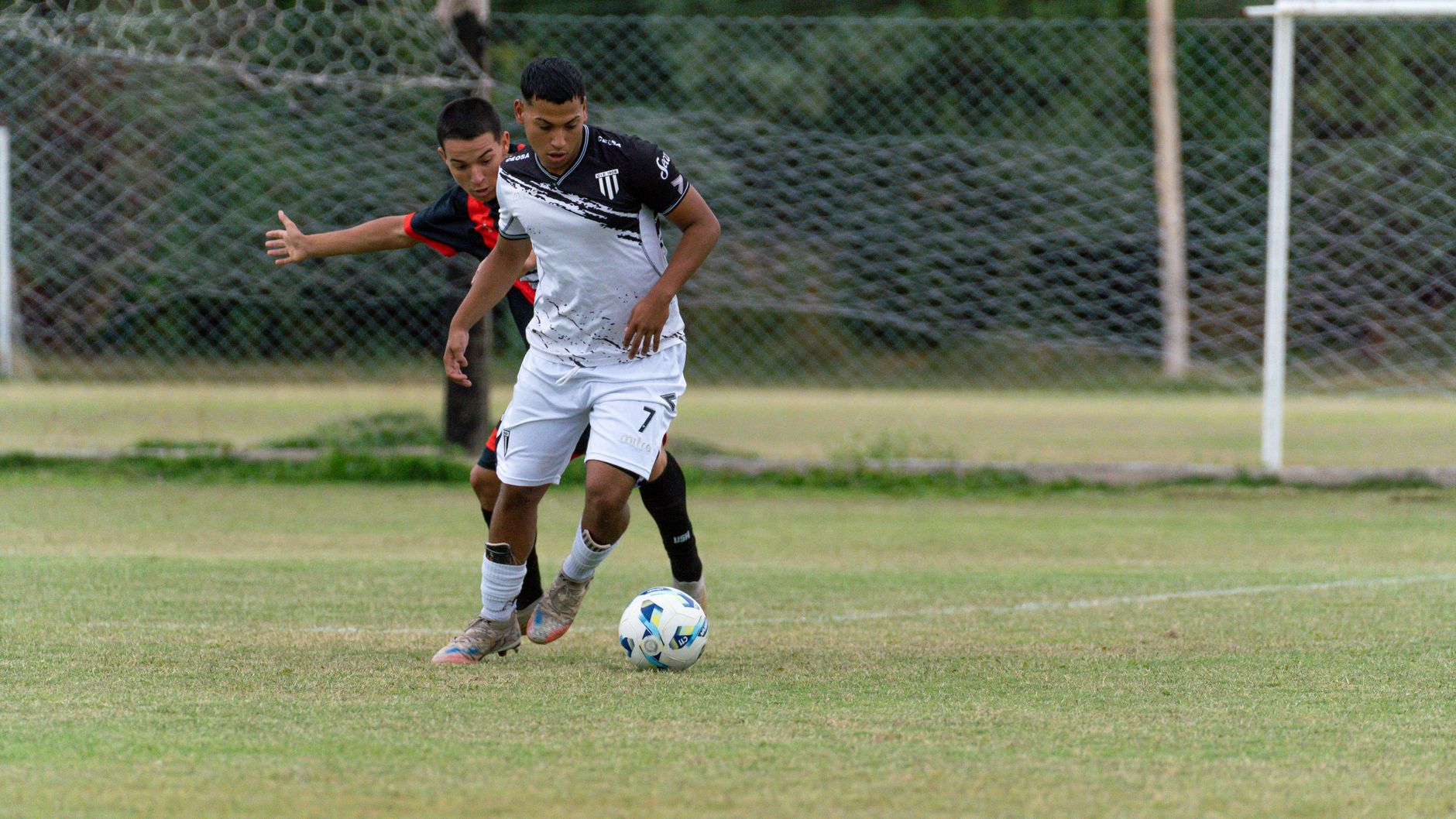
Photo by Franco Monsalvo on Pexels
What actually works for football fitness training?
Football fitness training works when it combines repeated-sprint ability, aerobic recovery, lower-body strength, agility, mobility, and ball actions in a progressive weekly plan. Most players should begin with three structured sessions, add intensity gradually, and preserve at least 24 hours between demanding lower-body workouts. The winning target is not exhaustion; it is repeatable quality.
How should you structure a weekly football fitness plan?
A weekly football fitness plan should place the hardest work away from match day and keep the final 24–48 hours relatively fresh. For a Saturday match, a useful schedule is Monday recovery and mobility, Tuesday high-intensity intervals, Wednesday strength and technical practice, Thursday repeated sprints or small-sided games, Friday activation and set pieces, and Saturday competition. This arrangement is not sacred scripture, but it respects a simple fact: fatigue has a bill, and somebody must pay it.
Use the following template for six weeks, adjusting it for age, injury history, and coaching demands:
- Monday: 20–30 minutes easy cycling or jogging, followed by 15 minutes of mobility.
- Tuesday: 6 x 3-minute hard intervals with 2-minute easy recovery, then 15 minutes of passing.
- Wednesday: 45–60 minutes of strength, including split squats, Romanian deadlifts, calf raises, and core work.
- Thursday: 2 sets of 6 x 20-metre sprints, with 20–30 seconds between repetitions and 3 minutes between sets.
- Friday: 25–35 minutes of light technical work, mobility, and three 10-metre accelerations.
- Saturday or Sunday: match, followed by a gradual cool-down.
Monitor session rating of perceived exertion, or sRPE, by multiplying effort from 1–10 by session minutes. A 60-minute session rated 7 equals 420 training units. This simple number helps prevent the classic amateur mistake: stacking three “hard but different” sessions and pretending the legs cannot count. To explore position-specific work, read our [Internal Link: football position fitness guide].
Get started with a measured six-week routine rather than random punishment sessions.
Which drills improve speed, agility, and match endurance?
The most useful football fitness drills connect movement quality with football decisions. A 5-10-5 shuttle develops braking and redirection, but adding a pass or visual cue makes it more realistic. Repeated 20-metre sprints target acceleration, while 30–40-metre flying runs develop top-speed exposure. Small-sided games of 3v3 or 4v4 raise heart rate while forcing scanning, pressing, and quick passing. That combination is a major information gain over generic “run harder” advice: fatigue must challenge the brain and the legs together.
Try this 30-minute circuit after a thorough warm-up:
- Complete 4 x 20-metre accelerations at 90–95% effort.
- Perform 4 repetitions of the 5-10-5 shuttle, resting 60–75 seconds.
- Play 4 x 3-minute 4v4 games with 2-minute recovery.
- Finish with 6 technical actions: receive, turn, pass, and sprint 10 metres.
- Record the fastest sprint and the slowest sprint; a drop greater than 5–7% suggests the session has reached its useful limit.
A practical edge case matters here. If your fastest sprint is 3.40 seconds and later repetitions fall to 3.65 seconds, performance has dropped 7.4%; adding more repetitions may train poor mechanics rather than fitness. Stop, recover, or reduce the next set. This is where a stopwatch beats motivational shouting, even if your coach has perfected the dramatic glare. For more detail, use our [Internal Link: sprint training and acceleration drills].

Photo by Sinan KRIYA on Pexels
How important are recovery, sleep, and nutrition?
Recovery is as important as training because adaptation occurs after the workload, not during the heroic suffering. Most adult footballers should target 7–9 hours of sleep, consume a carbohydrate-rich meal after demanding sessions, and include approximately 20–40 grams of protein in a post-training meal depending on body size and total diet. Water needs vary with heat, sweat rate, and session length, but replacing roughly 1.25–1.5 litres per kilogram of body mass lost can restore fluid more effectively than guessing. The International Olympic Committee identifies nutrition, sleep, and load management as central parts of athlete health.
A simple recovery test can expose problems before they become injuries. Each morning, record resting heart rate, sleep duration, muscle soreness from 1–10, and motivation from 1–5. After four weeks, you have a baseline. An unusually high resting heart rate—such as 8–10 beats above your normal reading—combined with poor sleep and heavy soreness is a signal to reduce intensity for 24 hours. This is not a medical diagnosis, and injured players should consult a qualified clinician, but it is a sensible warning system. One contrarian conclusion deserves emphasis: stretching harder is not a cure for accumulated fatigue. Better sleep and sensible load reduction usually produce more benefit than forcing a painful 30-minute stretch routine.
See the practical recovery details before your next intense session.
Myth 3: You must train hard every day to improve — flat-out false
Daily hard training is not a shortcut to better football fitness; it is a reliable route toward declining performance, poor sleep, and avoidable injury. Training creates stress, while recovery allows the body to rebuild, so the same sprint session repeated seven days a week produces less quality and more fatigue. The World Health Organization states that physical activity supports health, but it does not recommend treating every session as a maximal test. As the FIFA medical consensus puts it, “training load should be individualized,” which is precisely the point: your teammate’s workload is not your workload.
Use hard, moderate, and easy days instead of chasing daily exhaustion. Two demanding lower-body sessions separated by at least 48 hours are enough for many recreational players, while competitive athletes may tolerate more because their programs are monitored. Pain that changes running technique, swelling, sharp joint pain, or worsening soreness after 48 hours should not be “run through.” Reduce load and seek professional assessment. Football Compass encourages players to judge progress through better sprint consistency, sharper decision-making, and match output—not by how dramatically they collapse beside the water bottles.
What should you ignore when planning football fitness?
Ignore miracle conditioning claims, sweat-based fat-loss promises, untested supplements, and workouts that confuse exhaustion with football performance. Also ignore generic plans that prescribe identical distances to goalkeepers, defenders, midfielders, and forwards. A 2026 training plan should be based on your position, age, schedule, injury record, and current fitness rather than a viral video filmed by somebody wearing pristine boots.
Avoid these common errors:
- Running every session at maximum effort.
- Adding volume and intensity during the same week.
- Performing heavy leg training immediately before a match.
- Skipping warm-ups before sprinting.
- Treating soreness as proof of progress.
- Copying professional workloads without professional recovery support.
- Using caffeine or supplements without checking dose, legality, and side effects.
A proper warm-up should last 12–20 minutes and progress from light movement to dynamic mobility, ball touches, accelerations, and position-specific actions. The FIFA 11+ injury-prevention programme has been widely used as a structured reference, although coaches should adapt it to the squad and available time. Check our [Internal Link: football warm-up and injury-prevention routine] for a fuller sequence. The brutal truth is wonderfully simple: consistency over 8–12 weeks beats one spectacular workout every Sunday.

Photo by Franco Monsalvo on Pexels
How can you measure football fitness progress?
You can measure football fitness with repeat-sprint times, interval completion, heart-rate recovery, session effort, technical accuracy, and match-specific observations. Use the same test every 3–4 weeks, not every day, because daily numbers fluctuate with sleep, weather, stress, and accumulated fatigue. Progress means maintaining quality longer, recovering faster, or making better decisions at the same workload.
Track five indicators:
- 10-metre sprint: record the best of three attempts with full recovery.
- Repeated-sprint test: compare the fastest and slowest efforts across six repetitions.
- Yo-Yo or shuttle test: use a qualified coach and consistent surface.
- Heart-rate recovery: note the drop after one minute of rest.
- Technical output: count successful passes, shots on target, or defensive actions while tired.
A useful six-week benchmark is a 3–5% improvement in sprint consistency or a 5–10% increase in completed interval work at the same perceived effort. Do not treat those figures as universal guarantees; age, training age, climate, and playing level matter. The strongest evidence is triangulated: if your sprint times improve, your recovery heart rate falls, and your late-game passing remains accurate, you are probably fitter. If only your running distance increases while your decisions deteriorate, congratulations—you have become better at running without the ball.
Finish the cycle by comparing your numbers honestly, not by admiring the sweat on your shirt.
Frequently Asked Questions
Q: What are football fitness training tips?
A: Football fitness training tips are methods for improving endurance, sprinting, strength, agility, recovery, and technical performance together. A balanced weekly plan commonly includes two high-intensity sessions, one strength session, one technical practice, and at least one recovery day. The most useful measure is not total running distance alone but whether you can repeat fast actions and make accurate decisions during the final 15 minutes of a match.
Q: How do you improve football fitness quickly?
A: You can improve football fitness safely by combining intervals, repeated sprints, strength training, and small-sided games for 4–6 weeks. Start with two conditioning sessions weekly, such as 6 x 3-minute intervals and 2 sets of 6 x 20-metre sprints, then increase workload by no more than about 10% per week. Sleep for 7–9 hours and keep at least 24–48 hours between demanding lower-body sessions.
Q: What is the difference between football fitness and gym fitness?
A: Football fitness measures your ability to sprint, stop, turn, recover, and perform skills during a match, while gym fitness usually measures strength, muscle capacity, or general conditioning. A strong squat does not automatically create better pressing or finishing under fatigue. Combine gym exercises with acceleration drills, ball work, and small-sided games to transfer physical gains onto the pitch.
Q: Why does my football fitness training not work?
A: Football fitness training often fails because the workload is random, recovery is poor, or the exercises do not resemble match actions. Repeating maximum-effort sessions daily can reduce sprint quality and leave soreness for more than 48 hours. Record session effort, minutes, sprint times, sleep, and soreness for four weeks, then reduce intensity when performance drops by roughly 5–7%.
Q: How much football fitness training should a beginner do?
A: A beginner should complete three structured sessions per week, including one easy aerobic session, one strength session, and one football-based interval session. Keep hard work separated by at least 48 hours and begin with 20–30 minutes of conditioning rather than copying an elite player’s 90-minute workload. Add repetitions gradually, and stop for sharp pain, swelling, or movement changes.
Q: Do footballers need long-distance running?
A: Footballers can benefit from occasional easy running, but long-distance running should not dominate the program. A 20–30-minute conversational run can build aerobic support, while intervals and repeated sprints better match football’s stop-start demands. Use position, match level, and injury history to decide the balance; a midfielder and goalkeeper should not receive identical conditioning targets.
Q: Is strength training worth it for football players?
A: Strength training is worth it because stronger hamstrings, glutes, calves, hips, and trunk can support acceleration, deceleration, contact, and injury resilience. One 45–60-minute session weekly can help recreational players, while competitive players may use two sessions under coaching supervision. Prioritize controlled split squats, Romanian deadlifts, calf raises, core exercises, and progressive hamstring work instead of training every set to failure.
Football fitness improves when the plan is specific, measured, and recoverable: train the sprint, build the engine, strengthen the body, and protect the next session. Review your numbers every 3–4 weeks, adapt the workload to your position, and remember that a fresh player with 85 minutes of quality is more valuable than a shattered athlete with one impressive training day. Football Compass will keep tracking the tactics, player data, and tournament lessons that make fitness matter in real matches. Ready to turn these football fitness training tips into a serious routine?
Thank you for exploring this chronicle.
Football Compass · The Archive