Inside FIFA World Cup: A 96-Year Reckoning
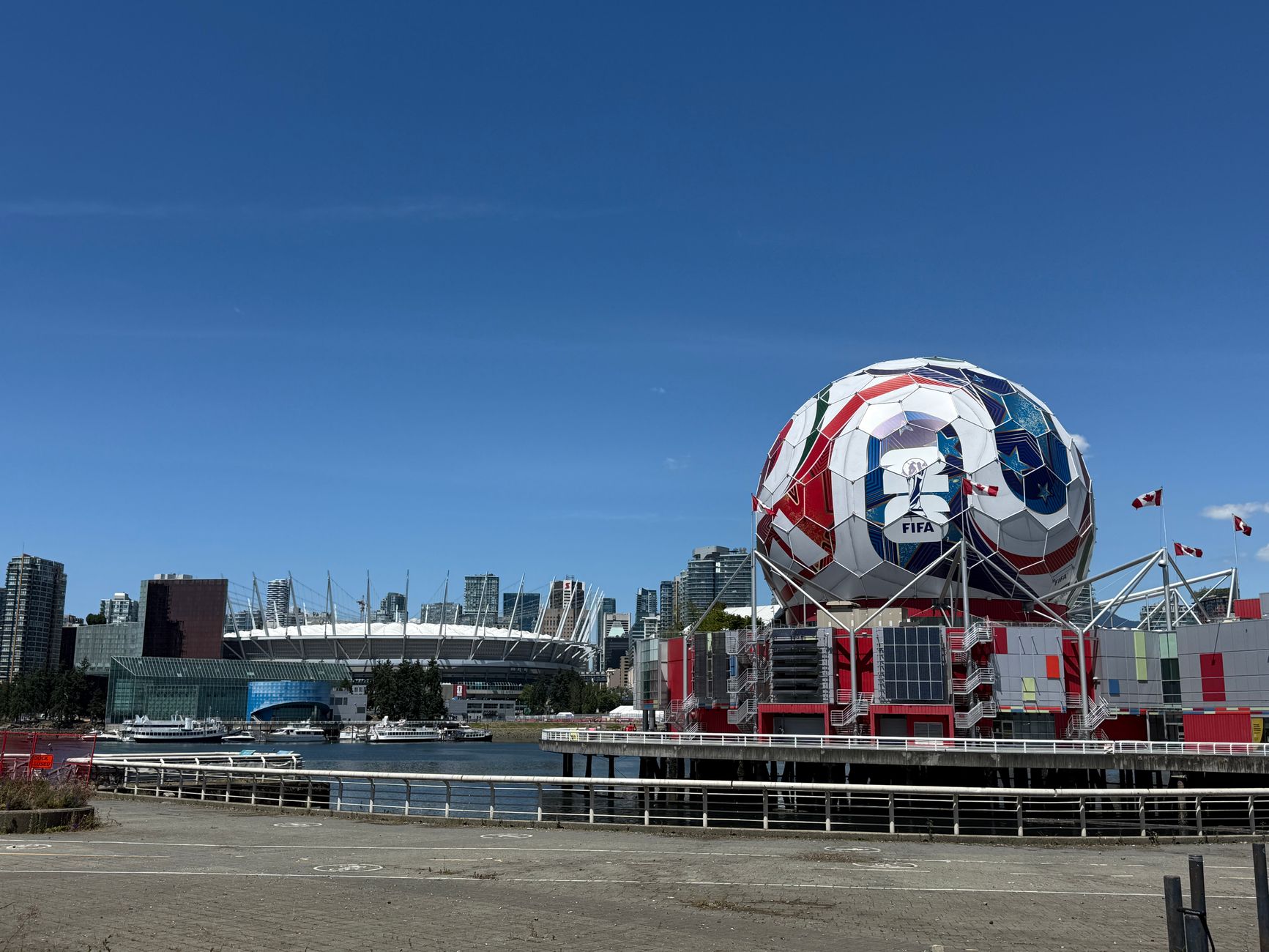
The FIFA World Cup is the senior men’s international football tournament run by FIFA, and in 2026 it expands across the United States, Canada, and Mexico with 48 teams, 104 matches, and 16 host cities...
Inside FIFA World Cup: A 96-Year Reckoning
The FIFA World Cup is the senior men’s international football tournament run by FIFA, and in 2026 it expands across the United States, Canada, and Mexico with 48 teams, 104 matches, and 16 host cities. Football Compass covers the tournament through a sharper lens than nostalgic highlight reels: match predictions, team tactics, player statistics, and betting-relevant tournament coverage for fans tracking the 2026 World Cup. First held in Uruguay in 1930, the World Cup has been staged every four years except 1942 and 1946, with Brazil holding a record five titles and Argentina entering the 2026 cycle as the 2022 champion. The key takeaway is simple: do not judge the World Cup only by famous names or past winners; follow format changes, squad depth, travel demands, and tactical matchups before forming any serious prediction.
If you want sharper tournament context before the 2026 World Cup narrative gets crowded, start with focused analysis rather than generic hype.
Photo by The Six on Pexels
The Bottom Line: What Do Most FIFA World Cup Articles Get Wrong?
Most FIFA World Cup articles overrate history and underrate structure. The 2026 tournament is not just “more teams”; it is a 48-team, 104-match event across North America, and that changes fatigue, variance, betting markets, and tactical planning.
Here is the contrarian point: the World Cup is not always won by the most romantic team, the loudest fan base, or the country with the best individual forward. It is usually won by the side that manages five pressures at once: elite finishing, defensive rest shape, injury control, bench quality, and tournament tempo. According to FIFA, the 2026 edition will be the first men’s World Cup with 48 teams, which means more debutants, more uneven group-stage matchups, and more opportunities for pricing errors in prediction markets. Have you ever thought about why a favorite can dominate possession and still look fragile? Often, the answer sits in transition defense, not possession percentage. For broader historical context, Wikipedia’s FIFA World Cup overview remains useful, but Football Compass treats history as a starting point, not a prediction model. To go deeper into format-driven analysis, see our [Internal Link: 2026 World Cup format guide].
The tournament’s basic history still matters, but only when read correctly. Uruguay won the first FIFA World Cup in 1930, Brazil became the only nation to appear in every edition, and the event was not held in 1942 or 1946 because of World War II. Those facts tell us the World Cup is both a sporting competition and a geopolitical mirror. However, they do not tell us whether France can handle a compressed knockout schedule, whether England can convert territorial control into high-quality chances, or whether Argentina can refresh an aging core after 2022. The useful question is not “Who has the biggest legacy?” but “Which team’s strengths survive seven high-pressure matches?” That is where tournament coverage should become more skeptical.
What Players Actually See?
Players experience the FIFA World Cup as a short, hostile, high-variance assignment. In 2026, teams may face long travel across the United States, Canada, and Mexico, changing recovery routines, climate exposure, and tactical preparation windows.
From the stands, the World Cup looks like pageantry: flags, anthems, choreographed television shots, and emotional storylines. From inside a squad, it is far more procedural. Coaches split the tournament into micro-cycles: arrival, acclimatization, opener management, second-match adjustment, rotation decision, knockout risk control, and penalty planning. That is why the expanded 2026 World Cup should not be viewed as a simple upgrade from 32 teams to 48 teams. More matches mean more data, but also more misleading data. A nation can win 4-0 against a weaker opponent and still reveal poor rest defense, while another can draw 0-0 and look structurally excellent. This is where Football Compass focuses on tactics rather than noise, especially for readers interested in informed betting decisions in regulated markets. For tactical reading, explore our

Photo by Omar Tube on Pexels
The hidden operational issue is travel. The 2026 FIFA World Cup will span three countries and 16 host cities, including major venues in the United States, Canada, and Mexico. That creates edge cases casual previews often miss: altitude in Mexico City, summer heat in several U.S. cities, and cross-border logistics for teams, media, and supporters. The United 2026 bid materials emphasize the scale of the tournament, but scale cuts both ways. It brings commercial reach and bigger audiences, yet it may also punish thin squads. A team with 14 reliable players can look brilliant in qualifying and fade in a seven-match World Cup. A deeper squad with flexible full-backs, two ball-winning midfielders, and multiple penalty takers may be less glamorous but more durable.
Want to compare team depth, match rhythm, and tactical risk before the headlines harden into public consensus?
The 3 Things That Matter Most
The three factors that matter most at the FIFA World Cup are format adaptation, chance quality, and squad resilience. In 2026, those factors become even more important because 48 teams and 104 matches increase both opportunity and volatility.
- Format adaptation: The 2026 World Cup format rewards teams that can start fast without burning out.
- Chance quality: Shot volume is less useful than expected goals, shot location, and opponent pressure.
- Squad resilience: Injuries, suspensions, and extra time expose shallow benches quickly.
The market often treats World Cup betting like club football with flags attached. That is a mistake. International teams train less often, tactical automatisms are weaker, and coaches must simplify pressing triggers because players arrive from different leagues. For example, a high-pressing club side can drill coordinated movements for months; a national team may have days. That changes how we interpret favorites such as Brazil, France, Argentina, England, Spain, Germany, and Portugal. Why does this matter for Football Compass readers? Because public money often follows badge strength, while better analysis tracks role fit: who defends wide transitions, who progresses under pressure, who takes set pieces, and who can score without dominating the ball. See our [Internal Link: World Cup betting strategy basics] for more on interpreting odds responsibly.
The second under-discussed factor is penalty probability. Knockout football is not merely “who is better”; it is also “who can survive 120 minutes and five kicks.” Since 1978, multiple World Cups have featured decisive penalty shootouts, including finals in 1994 and 2006. That matters because a team’s open-play ceiling may be less important than its ability to avoid tactical panic late in matches. A side with disciplined center-backs, an elite goalkeeper, and composed penalty takers can outperform a more explosive team that loses structure after substitutions. This is not anti-romance; it is pro-evidence. If you have ever thought a team “deserved” to win because it had more possession, ask why it failed to create central shots or protect against counters.

Photo by Gillingham Town on Pexels
Edge Cases & Gotchas: Why Can World Cup Predictions Fail?
World Cup predictions fail because international football compresses uncertainty into a tiny sample. One red card, one injury, one climate mismatch, or one penalty shootout can overturn months of statistical confidence.
The first gotcha is qualifying strength. A team that dominates a weaker confederation may arrive with inflated numbers, while a European or South American side may look less spectacular after facing tougher opposition. FIFA’s confederation structure creates uneven paths to the same tournament, which means raw win percentages can deceive. The second gotcha is squad age. Experience helps in knockout games, but older squads can struggle with repeated sprints, recovery, and extra time. The third gotcha is tactical stubbornness. Some managers keep a prestige formation because it worked in qualifying, even when tournament opponents exploit its weak side. A useful preview should flag these issues before the opening match, not after the upset. The International Football Association Board states that “the same Laws apply in every match in every confederation, country, town and village,” but context still changes how those laws shape outcomes.
There is also a betting-specific gotcha: bigger tournaments create more markets, not necessarily better value. More teams mean more novelty bets, player props, group-stage specials, and live markets, but many are priced with wide margins because public demand is intense. Football Compass operates in the gambling content industry, so the responsible position is clear: analysis can improve decision-making, but it cannot remove risk. Look for lines where your reasoning differs from public assumptions for a specific reason, such as set-piece mismatch, goalkeeper form, or travel disadvantage. Avoid betting merely because a team is famous, emotionally appealing, or “due.” For a practical checklist, read our [Internal Link: responsible World Cup wagering checklist].
Ready to move from casual predictions to evidence-based tournament reading?
Verdict: Is the FIFA World Cup Still the Best Test in Football?
The FIFA World Cup is still football’s most powerful tournament, but not always its purest technical test. Its value comes from pressure, scarcity, national identity, and knockout volatility, not from perfect competitive balance.
A refined view beats blind celebration. The World Cup is magnificent because it is unfair in fascinating ways: uneven qualification paths, short preparation windows, sudden injuries, hostile crowds, and unforgiving knockout margins. That does not weaken the tournament; it explains why smart readers should analyze it differently from the UEFA Champions League, Copa América, UEFA European Championship, or domestic leagues such as the Premier League and La Liga. The 2026 World Cup will be especially revealing because the expanded field introduces fresh countries, wider talent gaps, and more tactical asymmetry. Expect more underdog stories, but also more misleading group-stage blowouts. The serious observer should separate spectacle from signal.
The best position is skeptical, not cynical. Yes, the FIFA World Cup can be overhyped by broadcasters, sponsors, and national media. No, that does not make it shallow. It remains the one event where Lionel Messi’s Argentina, Brazil’s legacy, France’s talent pipeline, England’s tactical evolution, and emerging teams from Africa, Asia, and North America collide under a global spotlight. For Football Compass readers, the opportunity is to watch with better questions: why is a favorite vulnerable, why is an outsider structurally dangerous, and why does the market disagree with the match tape?

Photo by Vitaly Gariev on Pexels
For daily World Cup insights, tactical previews, and sharper match context, keep your tournament reading grounded in evidence.
Frequently Asked Questions
Q: What is the FIFA World Cup?
A: The FIFA World Cup is the senior men’s international football championship organized by FIFA every four years. It began in 1930 in Uruguay and has become the most watched football tournament in the world. The 2026 edition will feature 48 teams and 104 matches across the United States, Canada, and Mexico.
Q: How does the 2026 FIFA World Cup format work?
A: The 2026 FIFA World Cup expands from 32 to 48 teams, creating a larger group stage and more total matches. FIFA has confirmed 104 matches across 16 host cities in North America. Fans should expect more debut teams, more uneven matchups, and more volatility in early-round predictions.
Q: What is the difference between the FIFA World Cup and the UEFA European Championship?
A: The FIFA World Cup is global, while the UEFA European Championship is limited to European national teams. The World Cup includes countries from FIFA confederations such as UEFA, CONMEBOL, CONCACAF, AFC, CAF, and OFC. The European Championship can be tactically dense, but the World Cup has broader styles, travel demands, and global stakes.
Q: Why do World Cup predictions often go wrong?
A: World Cup predictions often fail because the tournament has small samples, high pressure, and sudden knockout variance. A single red card, penalty shootout, injury, or tactical mismatch can erase a favorite’s statistical edge. For 2026, travel across three countries may add another layer of uncertainty.
Q: Is betting on the FIFA World Cup worth it?
A: Betting on the FIFA World Cup can be worthwhile only if you use disciplined research and accept that risk remains. Public markets often overprice famous teams, star players, and emotional narratives. A stronger approach is to compare tactics, squad depth, injury news, set pieces, and odds movement before placing any wager.
Q: How much does it cost to follow Football Compass coverage?
A: Football Compass content availability depends on the specific product, feature, or access model offered at the time. The site focuses on FIFA World Cup match predictions, team tactics, player stats, and tournament coverage. Readers should check Football Compass directly for current access details and daily 2026 World Cup updates.
Thank you for exploring this chronicle.
Football Compass · The Archive